
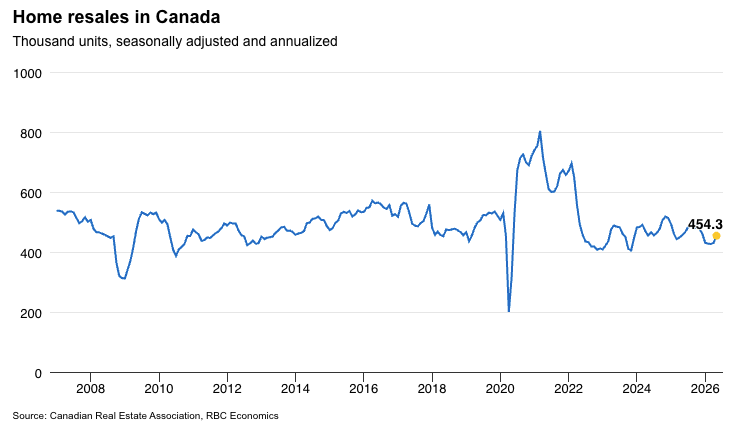
After a slow and uncertain start to the spring market, Canada’s housing sector is beginning to show signs of renewed momentum. New data from May reveals a notable increase in home resale activity, suggesting that buyers are gradually returning to the market after months of hesitation.
While the recovery is encouraging, housing trends continue to vary significantly across the country, and elevated inventory levels are keeping price growth in check.
Home Sales Rebound in May
Canadian home resales rose 5.5% in May compared to April, marking the largest monthly increase in nearly two years. This surge brings sales activity back in line with levels seen a year ago and signals that the traditional spring market may simply have arrived later than expected.
A combination of improving affordability and growing consumer confidence appears to be encouraging more buyers to re-enter the market.
Ontario and B.C. Lead the Recovery
The strongest gains were seen in many markets across Ontario, British Columbia, and Atlantic Canada, where resale activity increased noticeably during May.
However, the story is not the same everywhere. Housing markets across the Prairies and Quebec delivered more mixed results, highlighting the regional differences that continue to shape Canada’s real estate landscape.
For buyers and sellers, local market conditions remain far more important than national headlines.
Inventory Continues to Benefit Buyers
Despite stronger sales activity, home prices remained largely unchanged from April and continue to sit 4.1% below levels recorded one year ago.
The reason is simple: inventory remains plentiful.
With more homes available on the market, buyers have greater selection and negotiating power. This increased supply is helping to keep prices stable, even as demand begins to improve.
For buyers who have been waiting for the right opportunity, current market conditions may offer a favorable balance of choice and affordability.
What Could Drive the Market Higher?
Several factors could support continued improvement throughout the remainder of the year.
A stronger labor market, lower borrowing costs compared to recent peaks, and improving affordability are all helping to create a more supportive environment for housing activity. If these trends continue, we could see steady growth in both sales and buyer confidence.
Risks Still Remain
While the recent rebound is encouraging, the market is not without challenges.
Ongoing geopolitical uncertainty and potential tariff-related economic pressures could impact consumer confidence and slow housing activity. Any weakening of economic conditions could quickly affect buyer demand and delay a broader market recovery.
The Bottom Line
Canada’s housing market appears to be finding its footing after a delayed spring season. Sales activity is improving, buyers have more options, and prices remain relatively stable thanks to healthy inventory levels.
As always, real estate remains highly local. Whether you’re buying, selling, or investing, understanding the conditions in your specific market is essential. While the national outlook is becoming more positive, local trends will continue to drive opportunities throughout the remainder of the year.